Minimising Concussions
The best concussion is the one that is prevented
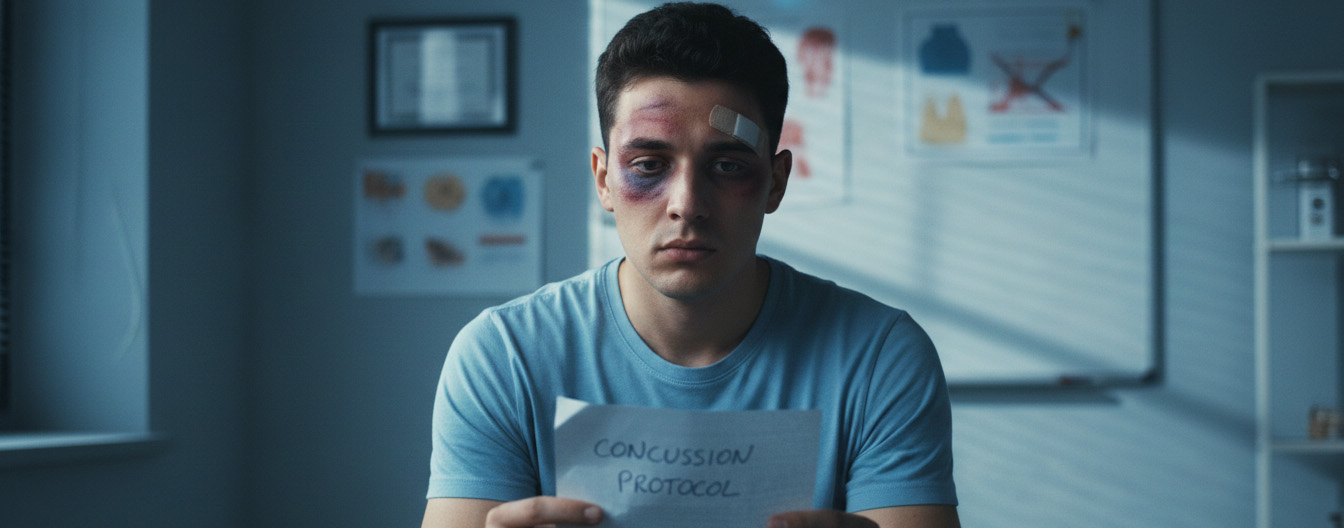
The best concussion is the one that is prevented. The next best one is the one that is recognised, acted on immediately and managed correctly.
Concussions can not only be life altering, they can be life ending.
Preventing them, recognising them and taking the right steps in treating them can help minimise their impact on your life.
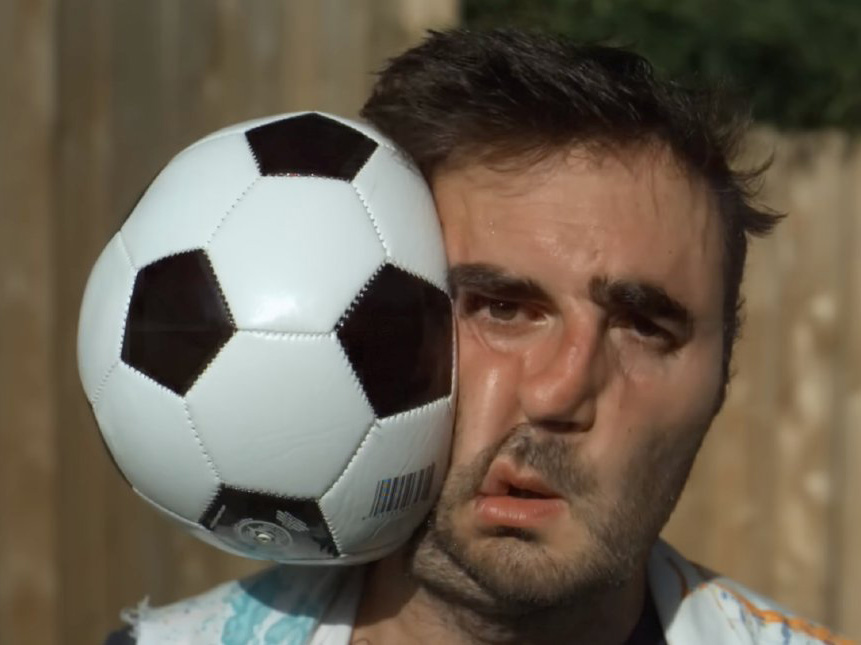
You don’t have to hit your head or be knocked out to become concussed. Any sudden jolt to the body or head that causes your brain to move rapidly inside your skull can cause a concussion.
A sudden rapid movement of your brain inside your skull may result in damage to your brain cells, alterations to your brain’s fuel and blood supply, and lead to chemical changes and inflammation.
Some of the symptoms associated with concussion are caused by the damage to the brain itself and are present immediately. Some come from inflammation as the body tries to heal itself and may take days or weeks to become noticeable.
The best concussion is the one that is prevented.
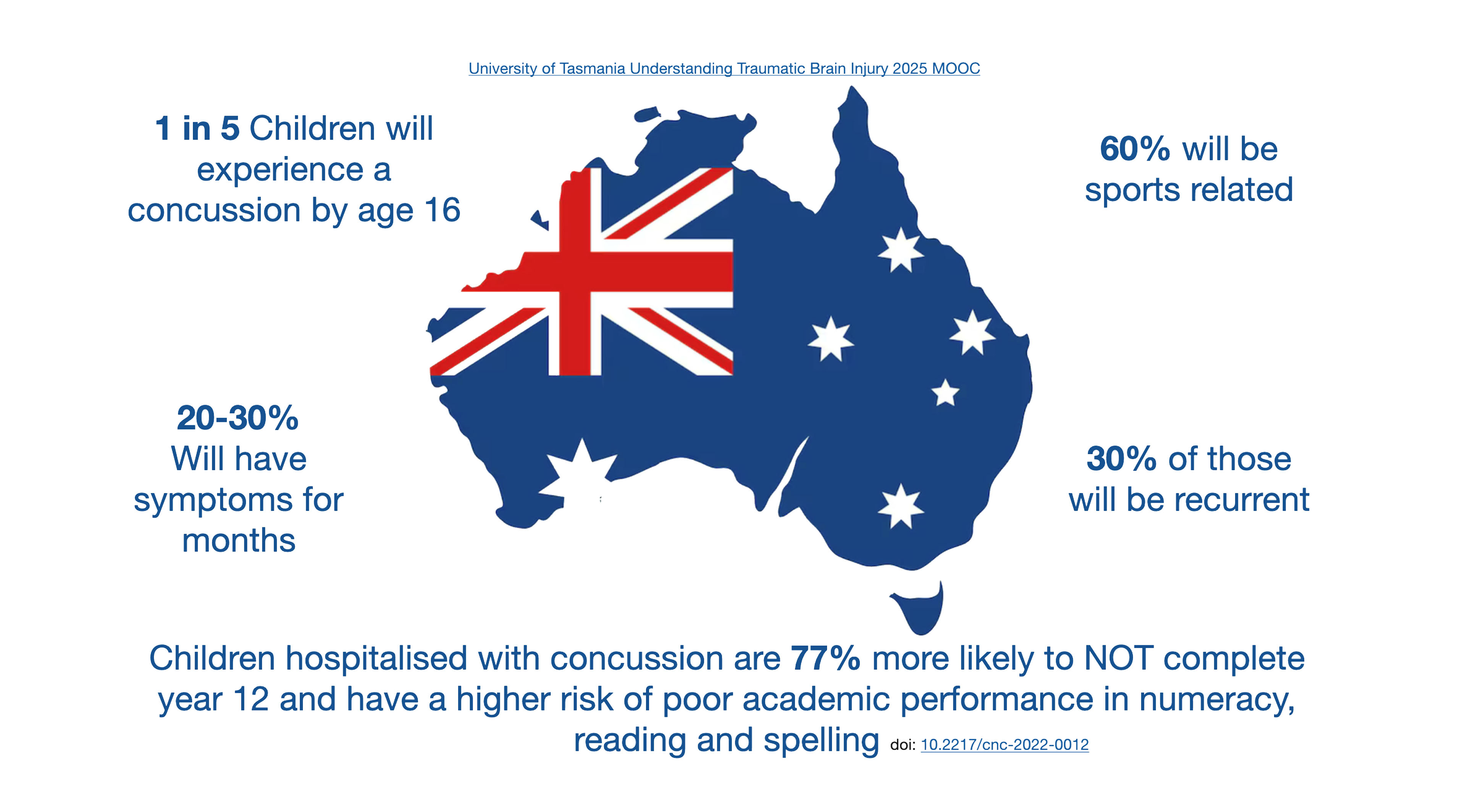
69 million concussions occur world wide each year.
There are 3 peak age groups affected by concussions: Young Children, Adolescents and Young Adults, and the Elderly.
Unfortunately people experiencing Intimate Partner Violence are another population affected.
There are some simple things you can do to prevent concussions, tools you can use to help you recognise if you, your child or your parent has one, and steps you can take to help you recover more quickly and decrease the chances of having symptoms that persist.
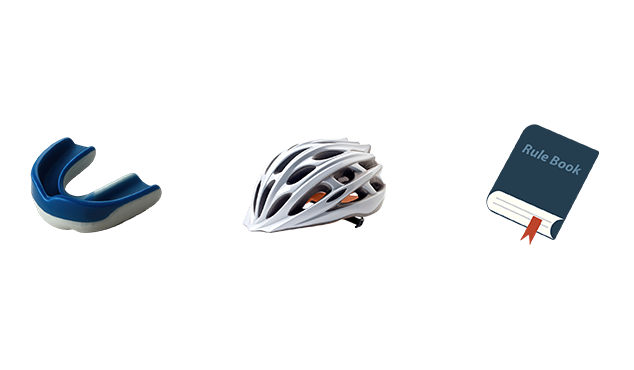
Mouth guards don’t just protect teeth. Wearing a mouthguard can decrease your chance of a concussion by 28%!
A helmet does nothing if it isn’t worn. It needs to fit correctly to make sure you’re getting all the benefits from it you should have.
Sporting rules are there for a reason. Many sports are now implementing rule changes to help minimise the risk of concussion. Some activities of adult sports, are not appropriate for still developing brains and bodies. Making sure to follow your sport’s guidelines even when just mucking about with mates is important.
Exercising your eyes as well as your body can both help you prevent concussions and help you recover from one. The ability to track play while moving and to increase your spacial awareness keeps your body alert and able to react more quickly. Eye exercises can also help you recover more quickly.
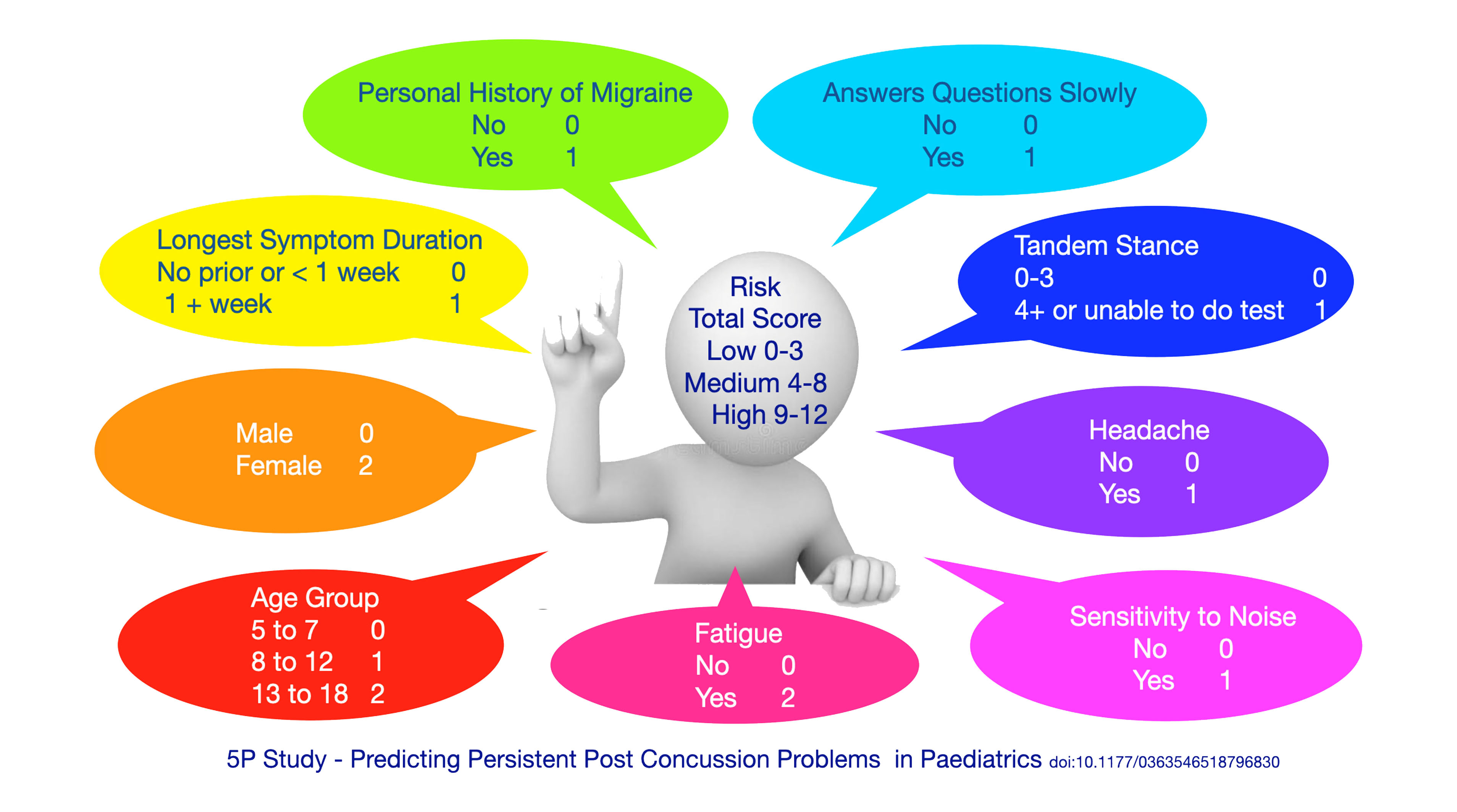
Some children are at higher risk of the affects of concussion than others. The questions from the 5P study can help you make informed choices when it comes to the type of sport you want your child to play.
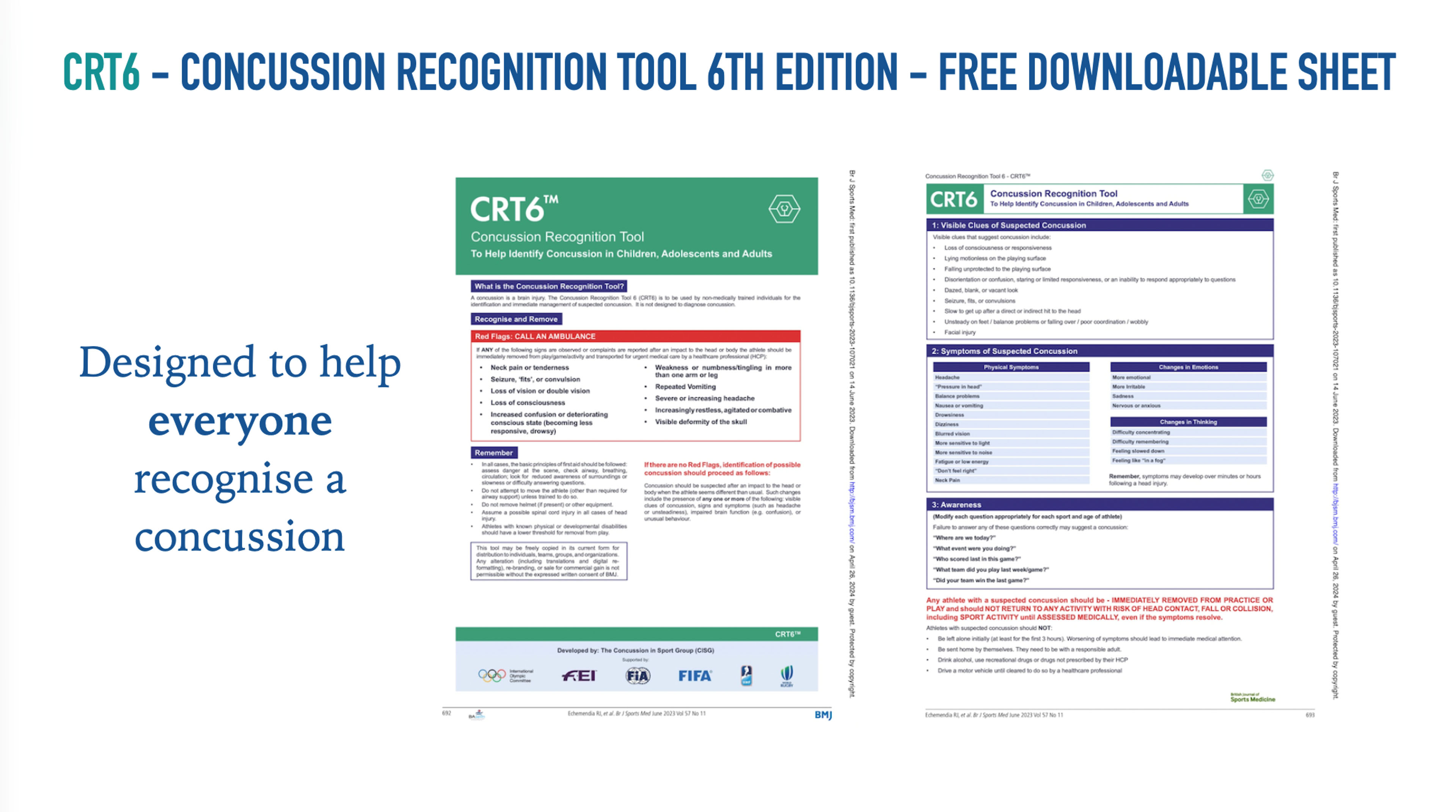
Would you recognise a concussion? The CRT6 form is designed to help everyone recognise a concussion and respond appropriately.
These both speed healing and minimise the risk of Second Impact Syndrome.
CRT6 -Concussion Recognition Tool - 6th Edition
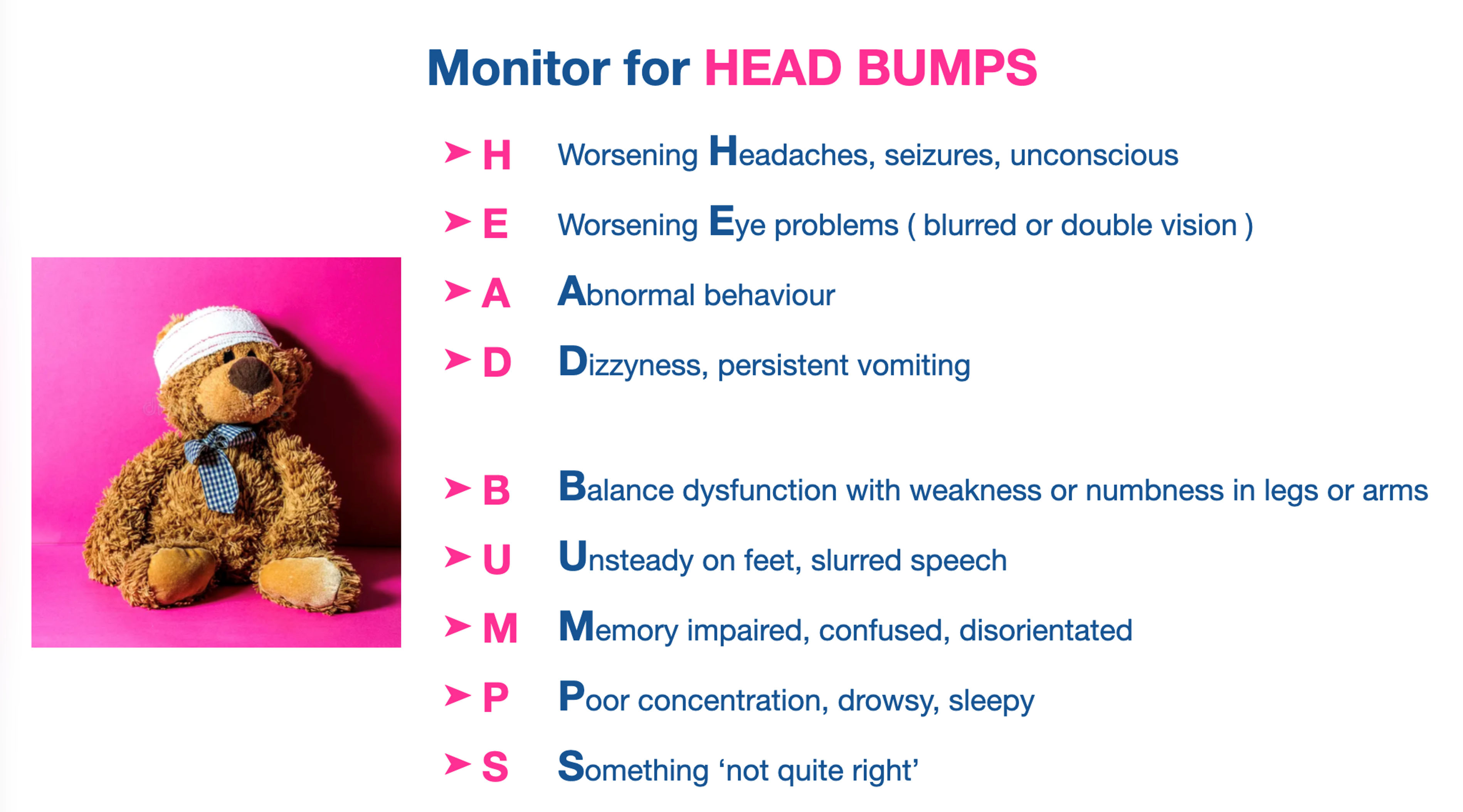
If you are monitoring someone who has had a concussion, would you know which symptoms mean you should go to the emergency room?
HEAD BUMPS are the things you should be looking for.
If your child’s behaviour is very different to their normal behaviour, seek urgent medical assistance.
There is no need to wake your child during the night unless you have been advised to do so by a doctor. Call an ambulance immediately if you have any difficulty waking your child.
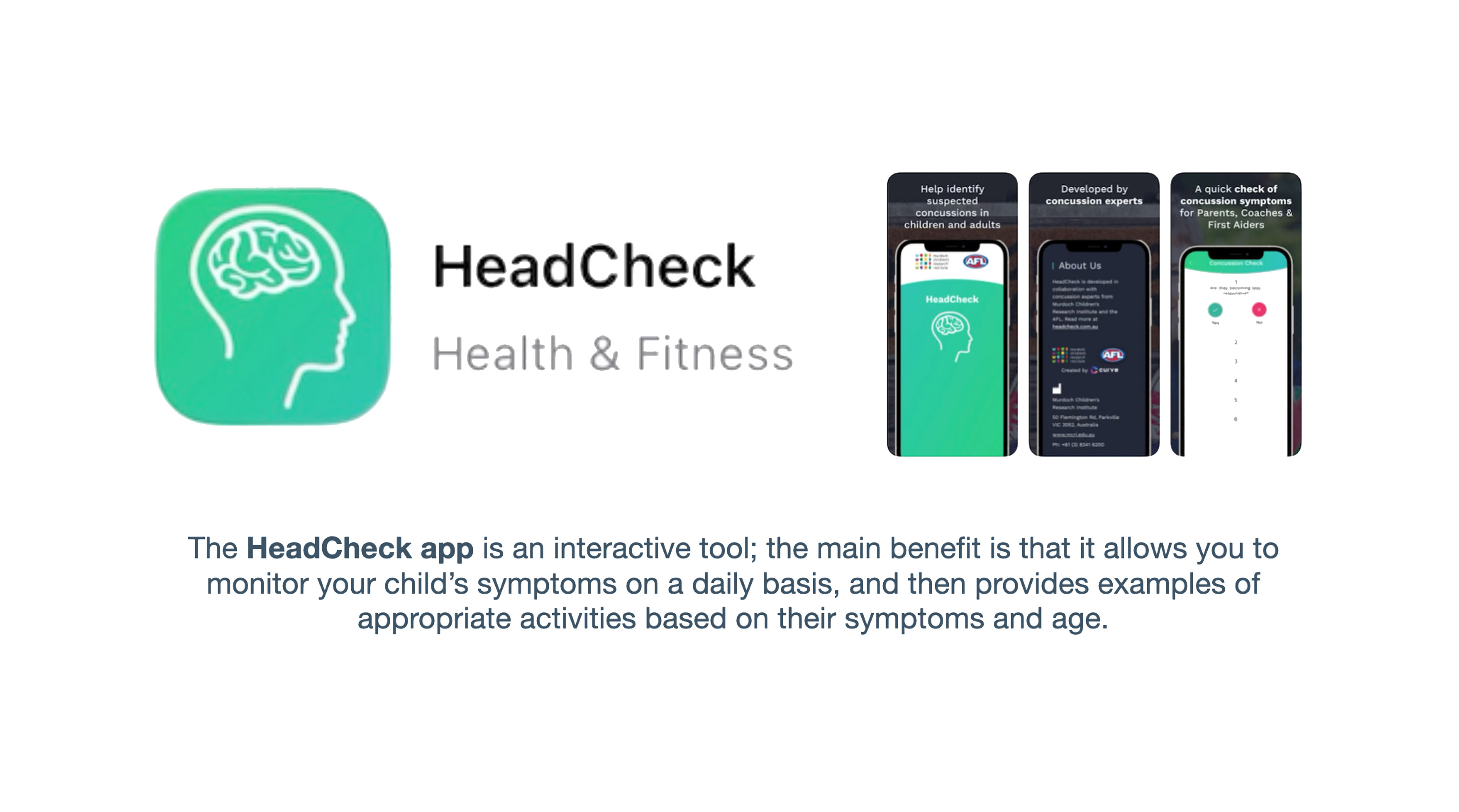
You may also want to download the HeadCheck app . It can help manage concussion recovery at home and is freely available on the App store and Google store.
I have 3 presentations on Recognising Concussion to Minimise It’s Impact, on YouTube. Each goes for around 25 mins.
Part 1: Why Concussions are Important – I talk you through what happens when you get concussed and how to avoid them.
Part 2: How to recognise a Concussion – I Introduce you to the CRT6 form and how to use it.
Part 3: How to Minimise it’s Impact – I explain what you should do to best minimise the effects of a concussion.
Along with regular chiropractic care to help restore correct spinal movement and nerve supply, The Nasal Release Technique allows us to have a big impact on skull movement and the glymphatic system’s ( the lymphatic system of the brain) drainage after a concussion.
Hypopressive breathing classes help return your body to a more parasympathetic state while resetting correct reflexive breathing patterns, both of which are important to help your brain return to its pre-concussive state as quickly as possible.
Updated January 2026